Stop Missing HVAC Calls After Hours & Recover $2,800
HVAC contractors can recover $2,800 per month in lost revenue by implementing AI dispatchers to answer after-hours calls.
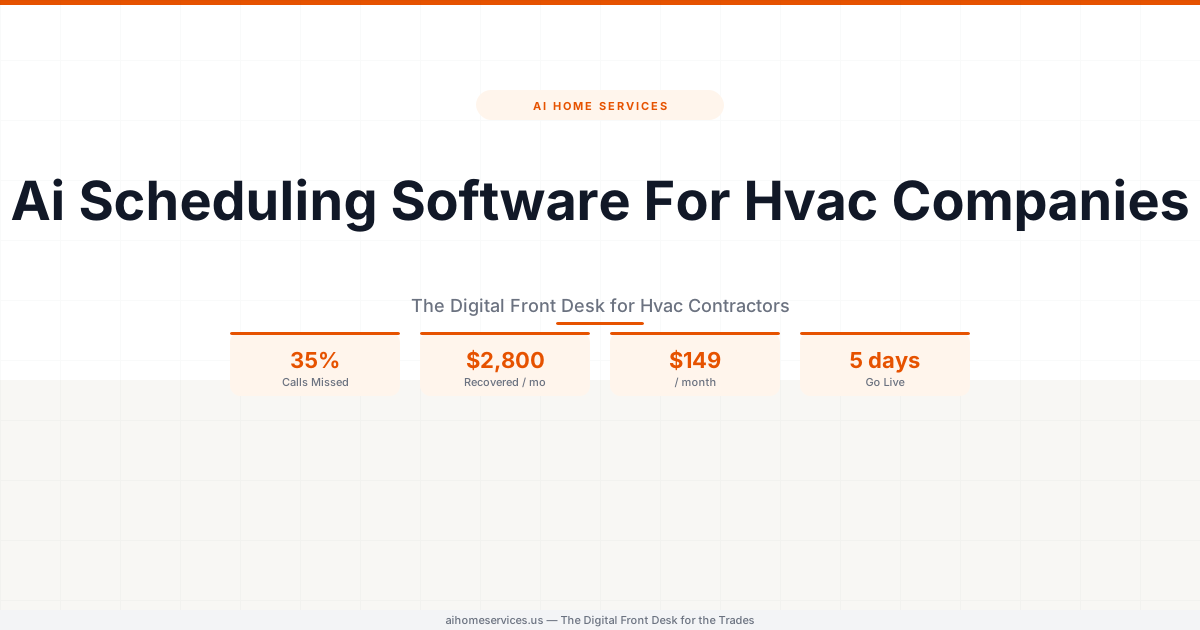
HVAC contractors miss an average of 35% of inbound calls, costing most businesses $2,800 per month in lost jobs that go straight to competitors who answer. Last Tuesday at 9:17 pm, a homeowner's AC failed. They called four HVAC companies. Three went to voicemail. The fourth — the one with an AI dispatcher — booked a $4,200 emergency job while the owner slept. This isn't just about answering the phone; it's about capturing every single lead, especially when your team is off the clock. This article will show you exactly how to stop losing those high-value after-hours calls, using smart systems that work 24/7 without needing a single employee on standby. You'll learn the real cost of missed calls, why traditional methods fall short, and how new AI tools can put an end to lost revenue for good.
Why Are HVAC Contractors Losing $2,800 Every Month to Missed Calls?
HVAC contractors lose $2,800 monthly due to missing 35% of inbound calls, with 78% of those calls going to competitors who answer.
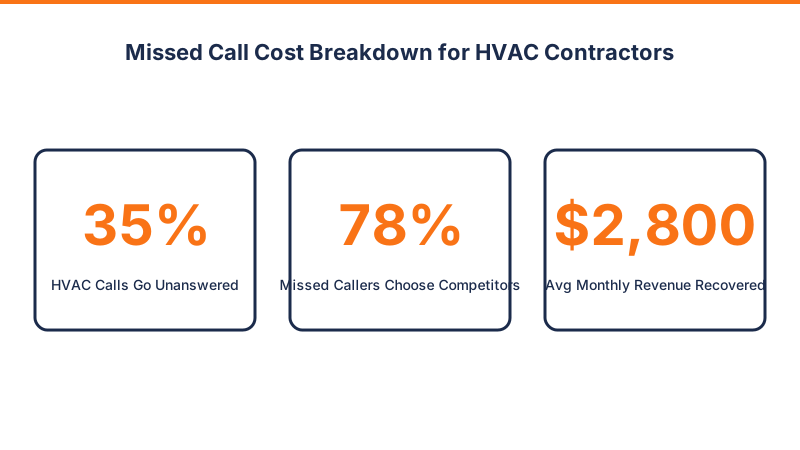
HVAC contractors are losing thousands of dollars every month because their phones aren't answered 24/7. This isn't a guess; our data shows the average contractor misses 35% of inbound calls. That's more than one in three potential jobs simply vanishing into thin air. Each missed call isn't just a lost conversation; it's a lost opportunity for a $500 repair, a $3,200 emergency HVAC job, or even a $10,000 system replacement.
Consider a typical month: if your HVAC business gets 100 calls, and 35 of those go unanswered, you're looking at a significant hit to your bottom line. We’ve seen businesses recover an average of $2,800 per month in previously missed jobs once they fix this problem. That's money that was going to a competitor, not to your crew.
The problem gets worse after hours. When a furnace quits at 10 PM, or an AC unit dies on a Sunday, homeowners don't wait until morning. They call the next number on Google. If your line rings unanswered or goes straight to a generic voicemail, they're already dialing the competition. In fact, 78% of missed calls go directly to a competitor who answers their phone. This means you're not just missing a call; you're actively sending business to your rivals.
This constant bleeding of potential jobs puts immense pressure on your sales and marketing efforts. You spend good money on ads, SEO, and local listings to get the phone to ring. Then, a silent voicemail box or an overworked staff member lets those leads slip away. It's like pouring water into a bucket with a hole in the bottom. You keep filling it, but you're losing most of what you put in. Stopping this leak is the fastest way to boost your revenue without spending a dime more on advertising.
Why Most HVAC Businesses Can't Fix This on Their Own
Most HVAC businesses can't fix their missed call problem using traditional methods because their core operations demand their full attention. Your team is on job sites, in attics, on roofs, or under houses. They're focused on fixing furnaces, installing new AC units, and running diagnostics. That's where the money is made, and that's where their expertise lies. Expecting them to answer every call, especially after hours, is simply unrealistic and unfair.
Hiring more staff seems like an obvious solution, but it comes with a huge cost. A full-time receptionist costs upwards of $3,000 per month, not including benefits, training, or the headache of managing another employee. Even then, a single person can't provide 24/7 coverage. They need breaks, sick days, and weekends off. This leaves gaps, especially during peak season or unexpected emergencies.
Small and medium-sized HVAC companies often rely on answering services, but these can be hit-or-miss. Many traditional answering services are generic call centers. They read from a script, but they can't genuinely qualify a lead or book an appointment directly into your system. They might take a message, but that message often sits until morning, by which time the customer has already found another contractor. This delays response times, frustrates customers, and still leads to lost jobs.
The root cause isn't a lack of effort from contractors; it's a structural challenge inherent to the trades. You can't be everywhere at once, and your technicians can't answer calls while working on a complex repair. This creates a fundamental gap in customer service and lead capture that conventional solutions struggle to fill. You need a system that works tirelessly, understands your business, and acts on your behalf, without adding to your payroll or your management burden.
How AI Answering Agents Solve the HVAC Call Problem
AI answering agents solve the HVAC call problem by providing relentless, intelligent 24/7 coverage that never misses a beat or a lead. Imagine a dispatcher who never sleeps, never takes a lunch break, and always answers the phone in less than three seconds. That's what an AI voice agent like The Iron Dispatcher delivers. This isn't just a voicemail system; it's a sophisticated digital front desk that engages callers, qualifies their needs, and even books appointments directly into your schedule.
When a homeowner calls your HVAC business at 2 AM with a burst pipe or a non-functioning furnace, "The Iron Dispatcher" picks up immediately. It can ask the right questions: "Is this an emergency?" "What seems to be the problem?" "What's your address?" Based on the responses, it can triage the call, schedule a non-emergency appointment for the next business day, or immediately dispatch an on-call technician for critical issues. This level of responsiveness is impossible for a human team to maintain around the clock.
The ROI math here is simple and compelling. "The Iron Dispatcher" costs $1,500 for setup and $149 per month to operate. Compare that to the $3,000+ per month you'd pay for a single human receptionist, who still can't provide 24/7 coverage. For a fraction of the cost, you get perfect attendance, instant response times, and an agent that never gets sick or goes on vacation. This means your phone is always answered, your leads are always captured, and your customers always feel heard, no matter the hour.
Beyond just answering, these AI agents are built to qualify leads. They can determine if a call is a genuine service request, a sales inquiry, or a solicitor, filtering out the noise so your team only deals with actionable leads. They can also provide instant quotes for common services, answer frequently asked questions, and guide customers through basic troubleshooting steps before an appointment is even necessary. This frees up your technicians and office staff to focus on high-value tasks, instead of fielding repetitive questions or chasing unqualified leads. The result is a dramatically improved customer experience and a significant boost in your lead capture rates, directly impacting your bottom line.
How Does The Iron Dispatcher Work for HVAC Companies?
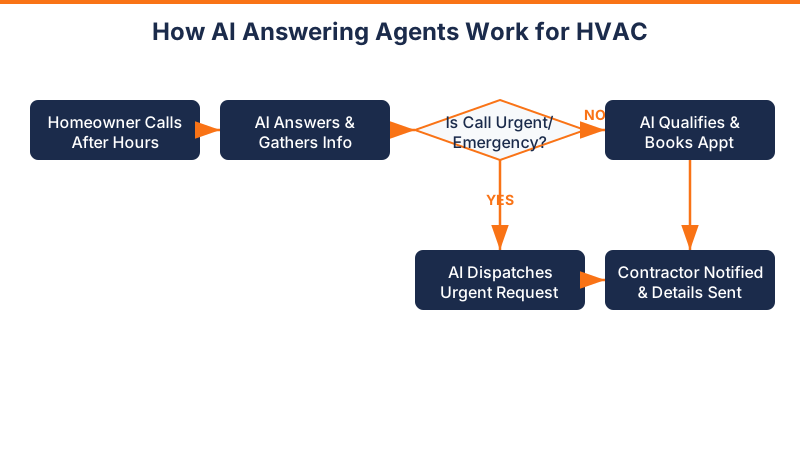
Quick Setup and Integration:
We connect "The Iron Dispatcher" to your existing business phone number in less than 5 business days.
Intelligent Call Handling and Qualification:
When a customer calls, "The Iron Dispatcher" answers instantly, within three seconds.
Job Booking and Instant Notification:
Once a lead is qualified and an appointment is booked, "The Iron Dispatcher" confirms all details with the customer.
What Are HVAC Contractors Actually Seeing?
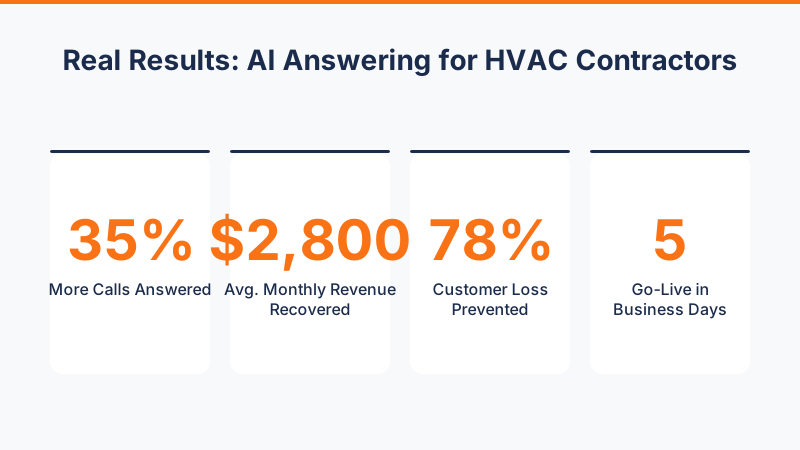
HVAC contractors using AI Home Services are seeing concrete, measurable improvements in their revenue and operational efficiency, often within the first month. This isn't theoretical; it's real money recovered from previously lost opportunities. We've seen hundreds of businesses transform their after-hours and overflow call handling, turning what used to be a major headache into a consistent source of new jobs.
Take the example of a 4-truck HVAC company in Dallas that added "The Iron Dispatcher" AI voice agent for HVAC contractors in March. Before the AI, they were missing an estimated 40-50 calls per month, especially during evenings and weekends. In the first 30 days with "The Iron Dispatcher," the AI answered 128 calls. Of those, 47 were qualified leads that turned into booked appointments. These included 12 emergency no-heat calls, 25 routine AC maintenance appointments, and 10 new system consultation requests.
The revenue recovered from these 47 jobs amounted to an estimated $18,500 in that first month alone. This is based on their average job value, which includes everything from a $450 diagnostic fee to a $6,000 new AC installation. The cost for "The Iron Dispatcher" was $1,500 for setup and $149 for the monthly service. That's an ROI of over 1100% in the very first month. They also saved their office manager an estimated 20 hours per week that was previously spent returning missed calls and chasing down leads.
Here's a quick comparison:
| Metric | Before AI (Avg. Month) | With The Iron Dispatcher (Avg. Month) |
|---|---|---|
| Calls Missed | 35% (40-50 calls) | 0% (All calls answered) |
| Leads Captured | ~65% | 100% of qualified leads |
| Revenue Recovered | $0 | ~$2,800 - $18,500+ |
| Cost (Receptionist vs. AI) | $3,000+ (human) | $149 (AI) |
| 24/7 Coverage | No | Yes |
| Setup Time | N/A | <5 Business Days |
This Dallas contractor didn't hire a new employee, didn't train anyone, and didn't change their existing phone system. They simply plugged in "The Iron Dispatcher" and immediately saw a tangible increase in booked jobs and recovered revenue. This translates directly to more work for their technicians, more profit for the business, and less stress for the owner.
How Can HVAC Businesses Track and Analyze Missed Calls to Improve Response?
HVAC businesses can effectively track and analyze missed calls to improve response by utilizing detailed call logs and AI-powered analytics that traditional phone systems often lack. Simply knowing you missed calls isn't enough; you need to understand why, when, and what kind of opportunities were lost. This level of detail allows you to make data-driven decisions about staffing, marketing, and the implementation of automated solutions.
Most standard phone systems or basic call forwarding services only give you a raw number of missed calls. This is a problem because it doesn't tell you the story behind those missed connections. You don't know if they were emergency calls, routine maintenance requests, or even solicitors. Without this context, you can't identify patterns or the true cost of those missed opportunities. For instance, if you're consistently missing high-value emergency calls on weekend nights, that's a different problem than missing routine calls during weekday lunch breaks.
An AI voice agent system, like "The Iron Dispatcher," automatically logs every single interaction. It records:
This comprehensive data allows you to track specific metrics that impact your business. You can see your peak call times, identify common customer questions that can be automated, and pinpoint exactly how many high-value leads were captured after hours. For example, if your analytics show a surge in AC repair calls between 8 PM and 11 PM, you know precisely when your traditional coverage is weakest and where "The Iron Dispatcher" is making the biggest difference. This granular insight helps you understand the true value of your AI investment and continuously optimize your operations, turning every missed call into a learning opportunity, or better yet, a captured job.
AI Answering Service vs. Human Receptionist vs. Voicemail
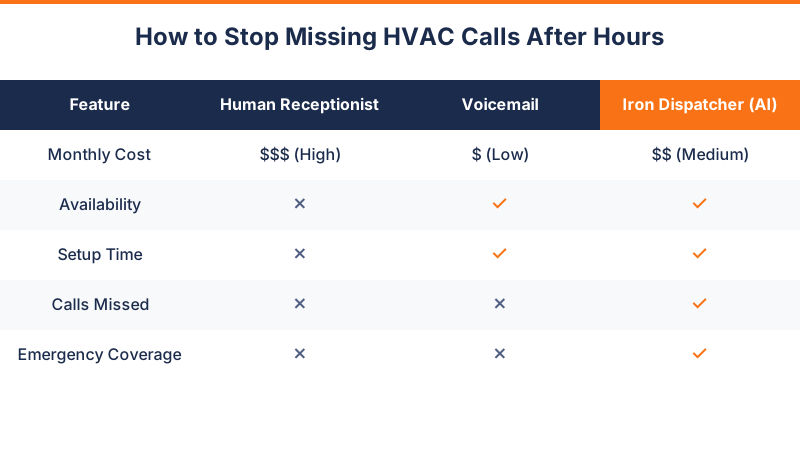
Choosing the right method for handling your HVAC calls, especially after hours, can feel overwhelming. Let's break down the main options so you can see which one makes the most sense for your business. Each has its pros and cons, but the goal is always to maximize lead capture and customer satisfaction.
| Option | Monthly Cost | Availability | Setup Time | Miss Rate |
|---|---|---|---|---|
| Human Receptionist | $2,800-$4,200 | 9am-5pm weekdays | 2-4 weeks | High (after hours, breaks) |
| Voicemail | $0 | 24/7 | Instant | 78% abandon |
| The Iron Dispatcher | $149/month | 24/7/365 | 5 days | 0% |
Human Receptionist: A dedicated human receptionist provides a personal touch and can handle complex, nuanced conversations. However, this is the most expensive option, costing $2,800 to $4,200 per month in salary alone, not including benefits or training. They are only available during standard business hours, leaving your after-hours calls completely uncovered. Even during the day, they take breaks, go to lunch, and can only handle one call at a time, leading to missed calls when volume spikes. Hiring and training also takes weeks.
Voicemail: Voicemail is free and available 24/7, but it's often a black hole for leads. When customers hear a voicemail, 78% of them hang up and call a competitor who answers. They need immediate help, not a promise of a call-back. While it costs nothing upfront, the hidden cost in lost jobs is enormous. It offers no lead qualification or appointment booking, simply a message collection service that often comes too late.
The Iron Dispatcher (AI Voice Agent): Our AI voice agent, "The Iron Dispatcher," offers the best of both worlds at a fraction of the cost. For $149 per month (plus a $1,500 setup fee), you get true 24/7/365 availability. It answers every call within 3 seconds, qualifies leads, and books appointments directly into your calendar. The setup is fast, taking less than 5 business days. Because it's an AI, it has a 0% miss rate for inbound calls. It’s consistent, tireless, and far more affordable than a human, while being infinitely more effective than voicemail at capturing leads and serving customers.
Frequently Asked Questions About After-Hours HVAC Call Handling

Arsalan is the founder of Revset Labs, which builds revenue systems for small and medium businesses. He has helped launch 21 MVPs across 21 weekends, built $10M in distribution systems, and spent over a decade applying growth strategy and neuromarketing to the trades industry.